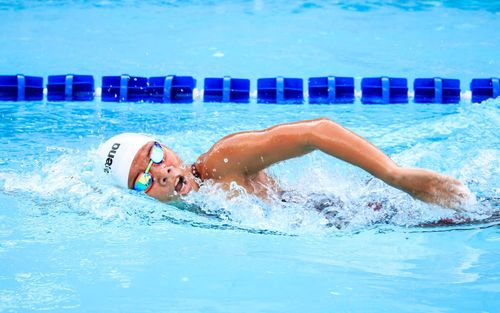
Swimming has several health advantages in addition to being entertaining and enjoyable. Whether you’re an experienced swimmer or you’re just getting started, perfecting your swimming strokes can help you increase the intensity of your workouts. Did you know that swimming can increase your cardiovascular fitness, help you burn calories, and help you gain muscle? It is real! Your entire body will get a tremendous workout from the water’s resistance, which targets the muscles in your arms, legs, and core.
But swimming is beneficial for more than just your physical health. Additionally, it might enhance your mental health. Stress and anxiety can be lessened with the help of the calming sound of the water and the feeling of weightlessness. Additionally, swimming’s meditative qualities might aid in mind-clearing and spiritual nature of cleansing your hyper active consciousness.
The Different Strokes Of Swimming
Breaststroke Is Comfortable For Most
Focus on swimming with your head and body in a straight line to enhance your breaststroke. Use a flutter kick to advance while practising drawing your arms back through the water in a circular motion. To increase your speed and effectiveness, you can also benefit from working on your arm recovery and leg kick.
Freestyle Is The Fast Swimmers Favorite
Focus on a strong, steady kick for the freestyle stroke employing a flutter kick or a scissor kick. Work on effortlessly moving your arms through the water and breathing on both sides of your body. As you swim, maintain your elbows close to your torso and your head and body in a straight line.
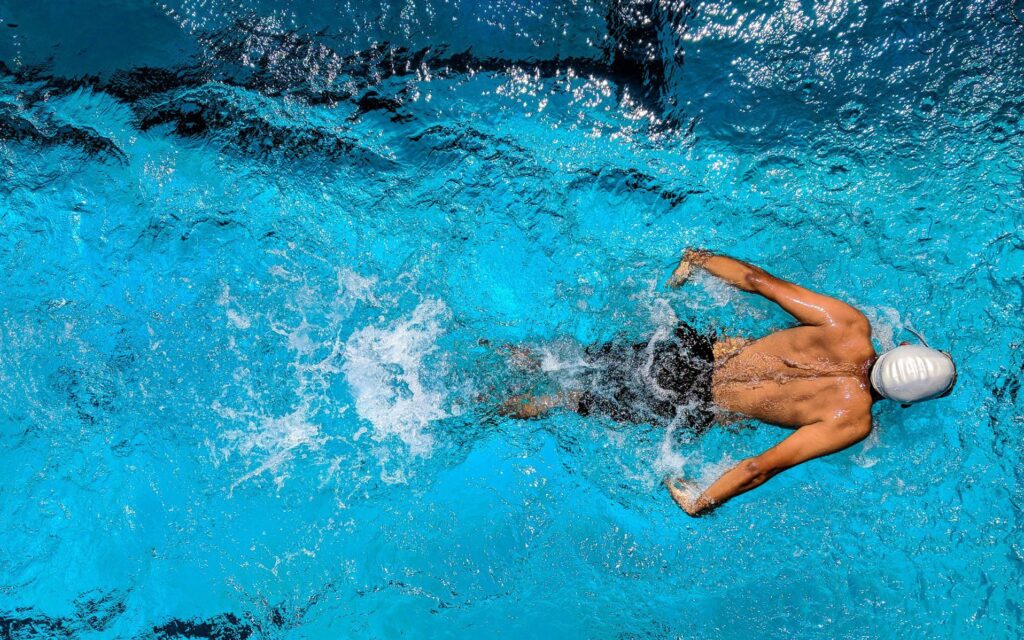
Butterfly Is Hard But Rewarding
A powerful and precise kick and arm motion are necessary for the butterfly stroke. Use your entire leg and hip muscles to kick your legs up and down in unison as you practise the “dolphin kick.” Aim for a strong, powerful pull through the water as you raise your arms out of the water while keeping them close to your body.
Backstroke To Watch The Beautiful Sky
Focus on a long, fluid arm recovery to work on your backstroke technique. Pull your arms straight back through the water while maintaining your elbows close to your body. Use a flutter kick or a scissor kick to practise a powerful and steady kick. Working on maintaining your body straight and your head and hips in alignment while you swim can also be beneficial.
How To Hold Your Breath For Longer For Better Swimming Results
- Longer breath holds are advantageous for certain swimming strokes, such the butterfly, as well as sports like diving, free diving, and snorkelling. Here are some ideas to keep in mind if you’re looking to improve your capacity to hold your breath1
- Use calming techniques: It’s normal to experience panic or anxiety when trying to hold your breath. But doing so can make it harder to hold your breath for an extended period of time. To assist calm your mind and body, try practising relaxation techniques like progressive muscle relaxation, deep breathing, or meditation.
- Breathe slowly and deeply to ensure that you can fit as much air as you can into your lungs when you inhale. This will enable you to hold your breath for longer.
- Exhale completely: Before holding your breath, be careful to thoroughly exhale to let out as much air as you can. Your ability to hold your breath until you need to take another breath will increase as a result.2
- Practice the “valsalva manoeuvre” by slightly exhaling, constricting your nose, and then holding your breath. You may be able to hold your breath for longer intervals by using the small exhalation to balance the pressure in your ears and sinuses.
Bonus tip to remember to always be safe when holding your breath. Don’t push yourself too hard or hold your breath for too long. If you feel lightheaded or dizzy, take a break and take a few deep breaths before trying again.3
Swimming Is Beneficial For Everyone
In conclusion, swimming is a wonderful sport that has many positive effects on both physical and mental health. There are a variety of techniques you may use to develop your swimming strokes and advance your workouts, whether you’re an experienced swimmer or just getting started. You can develop into a stronger, more proficient swimmer by emphasising proper form, practising frequently, doing swim drills, mixing up your workouts, and using the appropriate equipment. Additionally, you can enhance your swimming performance by working on your breath-holding skills and using relaxing techniques. Why not try swimming then? You’ll be astonished at how far you can advance with a little hard effort and determination.
Reference:
Leave a Reply