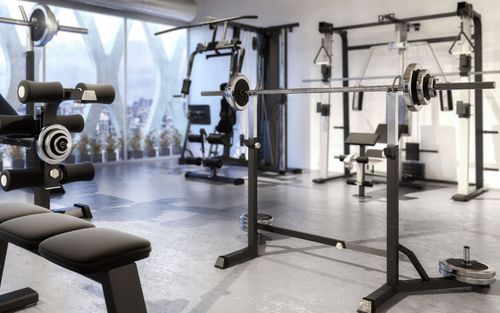
A push-pull split can be just what you need if you want to mix up your weight training regimen. By separating the muscular groups in your body into “push” and “pull” muscles, you can train each group on alternate days.
Why Is This Practice Beneficial?
However, why go with a push-pull split instead of a whole body or upper-lower split? There are a few major advantages to think about.
A push-pull split, in particular, enables you to concentrate on one set of muscle groups at a time rather than trying to train every muscle group at once. If you’re trying to catch up with a particular muscle area that’s trailing behind the rest of your body, this can be extremely effective. You can give your push or pull muscles the extra attention they require to develop and get better by allocating a whole workout to one or the other.
The Benefits Of A Pull-Push Split
A push-pull split also has the benefit of lowering the possibility of overtraining. You run the danger of overdoing those muscles and possibly injuring yourself if you train the same muscle groups on consecutive days. You can give your muscles a chance to fully recuperate before working them again by switching between push and pull routines.
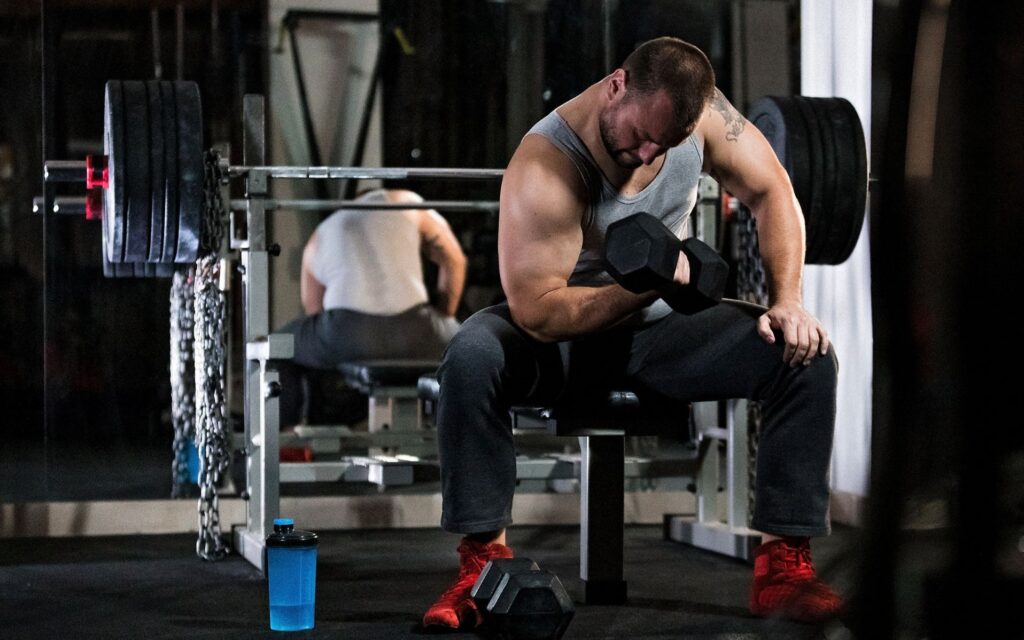
Then what do “push” and “pull” muscles actually do? The chest, shoulders, and triceps are examples of push muscles, which are used in pushing motions. The back, biceps, and forearms are examples of pull muscles, which are used in pulling actions. The list of muscle groups that belong to each category is broken down as follows:
Push muscles:
Chest\Shoulders\Triceps
Pull Muscles:
Back Biceps\sForearms
You would normally train your push muscles one day and your pull muscles the next with a push-pull split. For instance, you might work out your back, biceps, and forearms on Tuesday after working out your chest, shoulders, and triceps on Monday.
However, a push-pull split should not be restricted to just two weekly sessions. You may decide to perform a push-pull-legs split, adding lower body work to the mix, based on your objectives and timetable. In this scenario, you might work out your push, pull, and legs on Monday, Tuesday, and Wednesday, respectively, before starting the cycle over on Thursday.1
A push-pull split isn’t the only method to organise your weight training, of course. A full body regimen, where you work out every muscle group at once, can be your best option if you want a more thorough approach. Beginners or those with little free time in the gym may find this to be a terrific solution.
An other choice is an upper-lower split, in which you work out your upper body one day and your lower body the next. Given that you’ll only be working out half of your body at once, this can be an excellent option for individuals who want to give their muscles a bit more time to heal in between exercises.
The ideal weight training split for you will ultimately rely on your objectives, schedule, and preferences. Find a strategy that works for you and follow it, whether you decide on a push-pull split, a whole body workout, or something else different. When it comes to making success in the gym, consistency is essential, so don’t be hesitant to try out several strategies until you find one that works best for you.2
The Importance Of Warm-Ups In Strength Training
It’s crucial to begin any weight training practise with a warm-up to get your muscles and joints ready for the activity. This might entail some modest cardiovascular exercise or dynamic stretches like arm and leg swings.
After warming up, you may start your push workout by concentrating on chest, shoulder, and triceps exercises. Bench press, shoulder press, and tricep dips are a few possibilities. Aim for 3–4 sets of 8–12 reps for each exercise, using a weight that is difficult but yet enables you to perform each set properly.
Exercises for the back and biceps should thereafter be performed. There are a few possibilities here, such as rows, pull-ups, and bicep curls. For each exercise, strive for 3–4 sets of 8–12 repetitions, using a weight that enables you to complete each set with proper technique.3
Keep in mind to take breaks between sets so your muscles can rest and get oxygen. Additionally, it is an excellent time to drink water and stretch any tense muscles.
To aid in injury prevention and to speed up recovery, it’s crucial to cool down and stretch your muscles after your push-pull workout. To release any knots or trigger points, this may entail some static stretches, such as chest and quad stretches, or foam rolling.
It’s time to improve your weight-lifting regimen
A push-pull split can be an excellent approach to offer your muscles the specialised attention they require to develop and get better. You can give those muscle groups the additional attention they require to flourish by concentrating on either push or pull muscles throughout each workout. Just remember to pay attention to your body and modify your workout as necessary to make sure you’re challenging yourself without putting yourself in danger. Using a push-pull split in your weight training programme is thus possible. Happy lifting!
Reference:
Leave a Reply